Selling Soul: How the Authenticity Racket Became Hollywood's Slickest Con
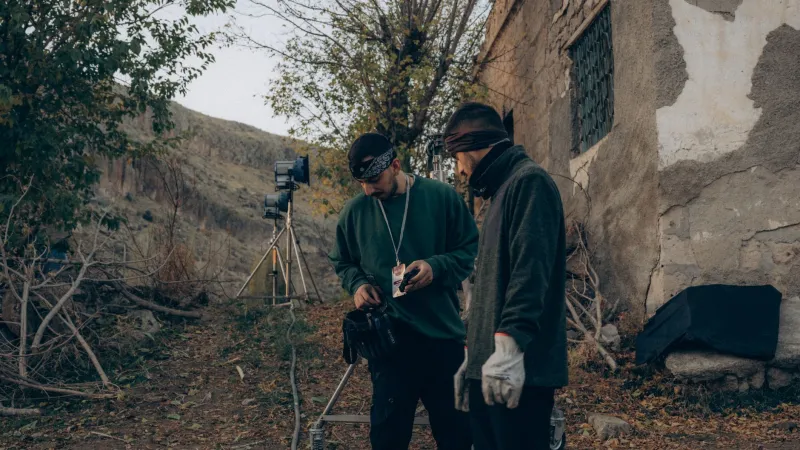
There's a specific kind of movie trailer that's been colonizing your social feeds lately. You know the one. Shaky handheld camera. Non-professional actors or at least actors performing non-professional-ness. A folk or indie score that sounds like it was recorded in a barn — probably wasn't, but sounds like it. A logline that says something like based on a true story or a deeply personal vision or, god help us, uncompromising. The whole package whispers: this one's different. This one's real.
It's almost never real. And the machine that made it is betting everything that you won't notice.
The Brand Called Rawness
Authenticity used to be something a film either had or didn't — an ineffable quality you felt in your chest during a quiet scene that nobody focus-grouped because nobody thought to. John Cassavetes didn't make A Woman Under the Influence to capture a demographic. Agnes Varda wasn't building a brand. The rawness in those films cost something. It was the product of genuine artistic risk, limited resources, and a refusal to sand the edges down for comfort.
What we have now is rawness as aesthetic strategy. Studios and prestige distributors have reverse-engineered the feeling of authenticity and packaged it for maximum awards-season ROI. The grit is graded in post. The emotional devastation is mapped against test-screening data. The story that seems too personal to be calculated is the most calculated thing in the building.
This isn't cynicism for its own sake. It's just math. The moment a particular type of sincerity starts winning Oscars and generating think-pieces, the industry doesn't admire it — it reproduces it. And it does so with the same ruthless efficiency it applies to superhero sequels. The only difference is the costume.
The Sundance Effect
Spend any time watching the trajectory of American independent cinema over the last two decades and a pattern emerges that's almost too depressing to diagram. A genuinely scrappy, surprising film breaks through — wins at a festival, earns rapturous reviews, maybe pulls an unexpected box office number. Within eighteen months, a dozen films arrive that replicate its surface texture without any of its interior life.
Sundance became the incubator for this cycle, and it's worth saying that out loud without apologizing for it. The festival still occasionally surfaces real work. But it has also become a marketplace where the language of independence — the mumblecore cadence, the naturalistic performance style, the narrative that refuses easy resolution — functions as product differentiator rather than artistic choice. Buyers walk those Park City screenings looking for the next thing that feels authentic enough to sell as authentic. The filmmakers who understand that game play it fluently.
The result is a cinema of performed sincerity. Films that have studied vulnerability the way a politician studies empathy — not to feel it, but to project it convincingly enough to close the deal.
The Anti-Establishment Establishment
Perhaps the richest irony lives in the films that explicitly position themselves as critiques of the entertainment industry or consumer culture while being wholly embedded in both. Movies about the hollowness of fame, manufactured by studios that have made fortunes manufacturing fame. Films about the corrosive effects of capitalism, released with six-figure marketing campaigns targeting the exact demographics most likely to feel guilty about capitalism.
This isn't a new observation — critics have been making it for years — but it keeps mattering because the gap between the message and the mechanism keeps widening. When a film about authenticity is itself the least authentic object in the room, something has gone genuinely wrong with the culture that produced it. Not wrong in a hand-wringing way. Wrong in a way that deserves to be named plainly and sat with.
The directors behind these projects are often talented. Sometimes they even believe in what they're making. But belief isn't insulation from the system. You can genuinely want to tell a true story and still watch that story get optimized, repositioned, re-cut based on audience response data, and released with a campaign that emphasizes whichever emotional note tested best in Minneapolis. The intention survives. The authenticity doesn't.
Can the Real Thing Still Breathe?
Here's where it gets complicated, because the answer isn't a clean no.
Genuine artistic expression still exists inside American cinema. It's just harder to find, and harder to fund, and increasingly pushed to the margins where the optimization machinery doesn't bother to reach. It lives in micro-budget films that will never see a wide release. In work by directors who have made the deliberate choice to stay small — not as a brand strategy, but because staying small is the only way to stay honest. In foreign-language films that arrive without the weight of a US marketing apparatus telling you how to feel about them before you sit down.
The problem isn't that authentic cinema is dead. The problem is that the word authentic has been so thoroughly annexed by its opposite that we've lost a shared language for identifying the real thing. When every calculated product is marketed as raw and unfiltered, rawness and filtration start to feel like the same thing. That's not an accident. Confusion benefits the machine.
What You Can Actually Do About It
Not much, honestly, if we're being straight about it. You can't opt out of a culture by watching more carefully, and individual consumer choices don't restructure industries. But you can get better at recognizing the tells — the slightly-too-polished imperfection, the emotional manipulation that arrives exactly on schedule, the film that challenges you in every way except the way that would cost it anything.
You can also stop rewarding the con with the reverence it's fishing for. A movie that performs authenticity to sell you something deserves to be evaluated as the commercial product it is, not elevated as the brave artistic statement it wants you to believe it represents. Give your actual admiration to the work that earned it — the stuff made without a safety net, the films that couldn't afford to ask a focus group what you wanted to feel.
Those films exist. They just don't have a campaign telling you they're real.
That's usually the first sign that they might be.