We Broke the Bad Guy: Hollywood's Obsession With Making Monsters Relatable
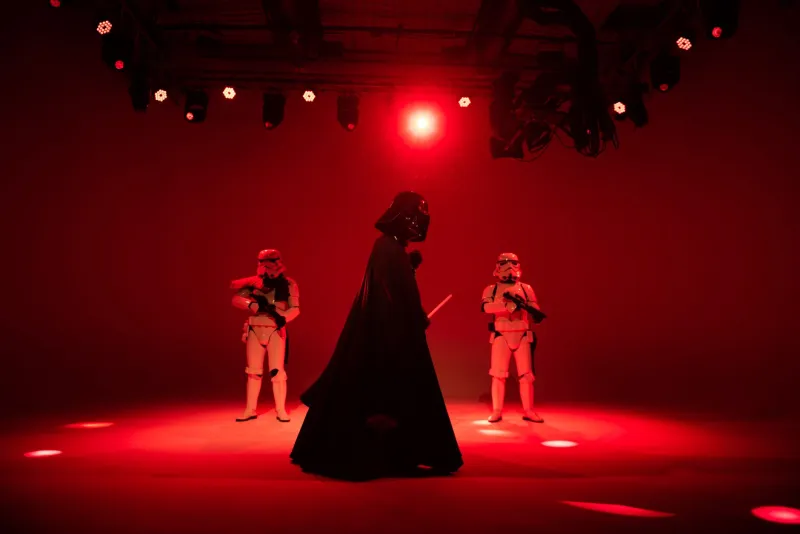
There's a moment in almost every contemporary blockbuster — you know the one. The villain pauses mid-carnage, the score drops to something mournful, and we get the scene. The dead parent. The system that failed them. The childhood wound that explains, in neat cinematic shorthand, why they turned out this way. The audience exhales. They understand now. They might even tear up a little.
And just like that, the movie flinches.
We have arrived at a strange place in American cinema — a moment where the most reliable thing you can say about a villain is that they're really just a protagonist who had a rougher go of it. Hollywood has developed what can only be described as a full-blown compulsion to redeem, explain, or tragically humanize anyone with the audacity to be genuinely threatening on screen. The bad guy isn't bad anymore. The bad guy is hurt.
The Therapy-ification of Antagonists
Credit where it's due: the impulse isn't entirely cynical. The idea that evil has roots, that cruelty is often a wound that learned to walk, is not wrong. Great literature has always understood this. But there's a significant distance between acknowledging the complexity of human darkness and defanging it for multiplex consumption — and modern cinema keeps stumbling drunk across that line.
Look at what's happened to the superhero villain pipeline. For every genuinely unsettling antagonist who gets to exist on their own malevolent terms, there are a dozen Thanos-style figures whose genocidal logic the film takes pains to present as, well, a perspective. Audiences were practically invited to write dissertations defending Thanos's resource-management philosophy. We turned a mass murderer into a Reddit debate.
Or consider the cottage industry that's sprung up around villain origin stories. Joker (2019) is the obvious touchstone — a film that spent two hours constructing elaborate social justification for a character whose entire power, traditionally, came from having no justification. Todd Phillips's version wasn't without craft, but it made a fundamental trade: it swapped the void at the character's center for a grievance list, and in doing so, turned one of fiction's great agents of chaos into a case study in systemic failure. Which is a real thing! Systemic failure is real and worth examining! But it's a different movie, doing a different job, and that job does not include letting you feel the cold, irrational dread of something that simply wants to destroy.
What We're Actually Afraid Of
Here's the uncomfortable question underneath all of this: why are we so resistant to letting evil be evil?
Part of it is commercial. A villain with a sympathetic arc is a villain who can carry a spinoff, a prequel, a Disney+ limited series. Maleficent. Cruella. Wicked, for better or worse, built an entire Broadway-to-Hollywood empire on the premise that the witch was the real victim all along. These projects aren't made because filmmakers are philosophically committed to moral ambiguity. They're made because IP is money and redemption arcs sell merchandise.
But there's something else going on, something more culturally specific to this moment. We live in an era that is deeply, almost pathologically committed to understanding. To finding the root cause. To believing that if we can just explain a thing, we can neutralize it. That's not entirely a bad instinct — it's driven a lot of important conversations about crime, mental health, and social policy. But it makes for terrible antagonists.
Because some things in human experience don't resolve into understanding. Some cruelty doesn't come with a clean origin story. And fiction's job — one of its oldest, most essential jobs — is to let us sit with that. To feel the presence of something that will not be reasoned with, will not be saved, and does not want your empathy. That's not nihilism. That's honesty.
The Catharsis We're Being Denied
Classic cinema understood this instinctively. Hannibal Lecter doesn't need your sympathy. Anton Chigurh isn't waiting for you to understand his childhood. The shark in Jaws is not the product of a broken home. These figures work precisely because they represent something the narrative refuses to domesticate — a force that exists outside the social contract, outside the therapeutic framework, outside the audience's ability to fix or explain.
The cathartic power of a genuine villain is not about celebrating evil. It's about the rare, almost taboo experience of confronting something that will not bend to the logic of redemption. There's a release in that. A kind of dark permission to acknowledge that not everything broken can be repaired, not every monster was made by circumstances we could have changed.
When you strip that away — when every antagonist gets their sad montage and their understandable motivation — you don't create moral complexity. You create moral mush. Everything becomes a shade of gray so uniform it stops meaning anything at all. The villain becomes the protagonist of their own story, which sounds sophisticated until you realize it just means there are no more villains. Just a screen full of main characters who made different choices.
Let Them Be the Bad Guy
None of this is an argument for shallow writing. A well-drawn antagonist can be terrifying and three-dimensional. Those things are not mutually exclusive. What's being argued here is something more specific: the refusal to let a character be genuinely, unreservedly threatening without the film stopping to make sure you feel okay about it.
The best villains in recent memory tend to be the ones who slip through the redemption pipeline. Cate Blanchett's Hela. Javier Bardem's Silva in Skyfall — magnetic and broken, yes, but the film never asks you to root for him. Barry Keoghan's Oliver Quick in Saltburn, who the movie wisely refuses to explain away even as it gives you enough rope to try. These characters land because the filmmakers trusted the audience to handle darkness without a safety net.
That trust is increasingly rare, and its absence is making our stories smaller.
There is real, irreplaceable value in a character who simply wants to burn it all down. Not because they were failed by the system, not because their parents didn't love them enough, not because society left them no other choice — but because destruction is what they have chosen, and the film is brave enough to let that stand without apology or asterisk.
We used to know how to make those characters. We used to let them haunt us. Somewhere in the rush to make everything legible, everything relatable, everything fixable, we stopped.
And our movies got a little safer, and a little emptier, and a little less true.