The Vanity Industrial Complex: When Stars Stopped Acting and Started Auteur-ing
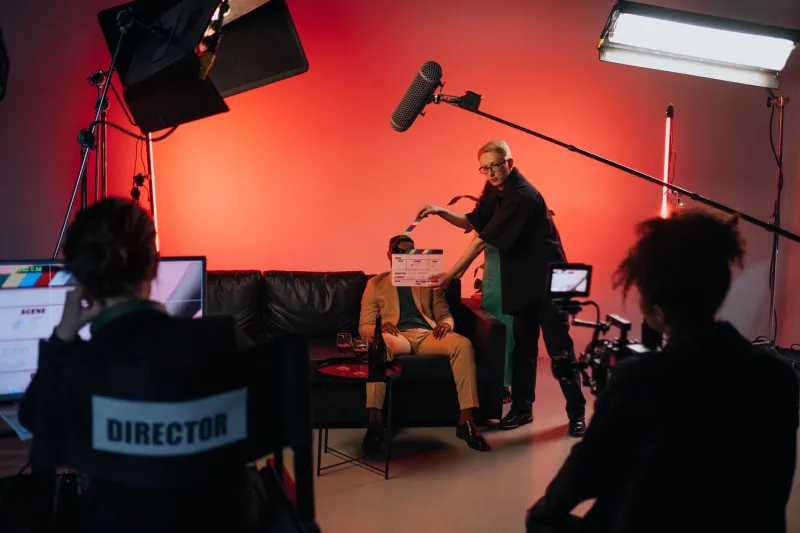
There's a specific kind of movie that arrives every awards season wearing its ambition like a name tag. You know the one. A major star not only headlines it but produced it, probably co-wrote it, maybe directed a few scenes on the sly, and has been talking about it in interviews as a project that's been close to their heart for over a decade. The trailer is slow. The color palette is muted. Someone cries in the rain. Critics call it brave. Audiences call it boring. The studio calls it a write-off.
Welcome to the Vanity Industrial Complex — Hollywood's most expensive participation trophy.
From Talent to Tycoon
The shift didn't happen overnight. It crept in gradually, riding the coattails of legitimately great actor-driven projects that proved stars with strong creative instincts could produce genuinely remarkable work. When it works, it really works — think Clint Eastwood building an entire second career behind the camera, or Barbra Streisand wrestling Yentl into existence through sheer force of will. These weren't vanity plays. They were genuine artistic bets.
But somewhere along the way, the industry confused the exception for the rule. Every major star suddenly needed a production shingle. Every mid-career pivot required a passion project. Every Oscar winner decided the real story they needed to tell was, conveniently, their own.
The economics made it inevitable. Studios discovered that attaching a recognizable name to the producer credit gave a film a built-in marketing hook, a press narrative, and a layer of insulation against critical attack. Hard to call a movie self-indulgent when the star who made it is sitting across from you at a press junket talking about their grandmother. So the deals kept getting made, the creative control kept expanding, and the movies kept getting longer, quieter, and more inexplicably about memory.
The Clout Economy and Its Casualties
Here's the uncomfortable math. A-list actors accumulate leverage the same way tech bros accumulate venture capital — not necessarily because they have the best ideas, but because they have the most access. When your name can greenlight a $40 million film, studios aren't evaluating your script on its merits. They're evaluating your Q score. The result is a marketplace where creative decisions get made based on star power rather than storytelling instinct, and where the word "no" gets quietly retired from the vocabulary of anyone who wants to keep their development deal.
The casualties pile up in ways that don't always make headlines. Directors get sidelined when their vision conflicts with the star's. Editors find themselves working around sacred scenes that everyone on set knew weren't working. Supporting actors get trimmed because the runtime is already two and a half hours and nobody's cutting the star's monologue. The film that emerges is less a collaborative work of cinema and more a monument to one person's unchecked creative appetite.
And the genuinely maddening part? These movies often get made instead of something riskier and better. Every bloated prestige vanity project that gets a greenlight is a slot on the release calendar that didn't go to a first-time filmmaker with an actual story to tell.
The Performance Paradox
Here's what nobody wants to say out loud: the best performances in Hollywood history were almost never self-directed experiments in personal mythology. They were the result of friction. A director who pushed back. A script that didn't let the actor off the hook. A set where the star wasn't also the boss.
Marlon Brando in The Godfather wasn't running his own production company. Meryl Streep in Kramer vs. Kramer didn't produce the film she won her first Oscar for. Daniel Day-Lewis, widely considered the greatest screen actor of his generation, worked with directors who challenged him, not for vanity labels that protected him. The creative tension between actor and filmmaker is often exactly what generates the electricity audiences respond to. Remove that tension — hand the actor total control — and you frequently get something technically accomplished and emotionally inert.
There's a reason the phrase "pet project" exists. Pets are comfortable. They don't challenge you. They don't tell you that scene in act two isn't landing or that the movie is forty minutes too long. They just sit there looking at you like you're brilliant.
Prestige as Product
Studios aren't innocent bystanders in this arrangement. They've learned to use vanity projects as prestige currency — a way to keep major talent happy, generate awards-season buzz, and signal cultural seriousness without necessarily committing to genuine artistic risk. The calculus is cynical but coherent: bankroll the star's dream project, get goodwill, maybe snag a nomination, move on. Whether the movie is actually good is almost beside the point.
This is how we end up with a specific flavor of prestige film that's technically impeccable and spiritually hollow. Every department did their job. The cinematography is beautiful. The score is tasteful. The lead performance is committed to the point of self-destruction. And yet nothing lands, because the whole enterprise was built around protecting one person's vision rather than interrogating it.
The audience, to their credit, usually figures this out. Vanity projects have a peculiar box office signature — a strong opening weekend driven by star loyalty and awards buzz, followed by a cliff-drop as word gets out that the movie is less a film and more an extended meditation on the star's inner life. They came to see a story. They got a therapy session they weren't invited to.
The Way Back
None of this means actors shouldn't produce. Some of the most interesting production companies in the business are run by performers with genuine taste and real editorial instincts — people who use their clout to champion other people's stories rather than their own. That's the model worth celebrating. Clout as a tool for opening doors, not for building monuments.
The industry needs to rediscover the value of creative friction. Actors need directors who can tell them their idea isn't working. Studios need executives willing to say the movie is forty minutes too long even when the star is in the room. And audiences need to stop treating "based on a true story about the person who starred in and produced it" as an automatic mark of quality.
Because here's the four-letter truth about passion projects: passion is not a substitute for perspective. And the most dangerous thing you can give a talented person is a room full of yes-men and a green light.
Some of the best performances ever committed to film happened because someone, somewhere, told a brilliant actor exactly what they didn't want to hear. That's not a constraint. That's the whole art form.