The Ugly Trophy: Hollywood's Obsession With Stripping Stars Down Is Starting to Feel Like a Punishment
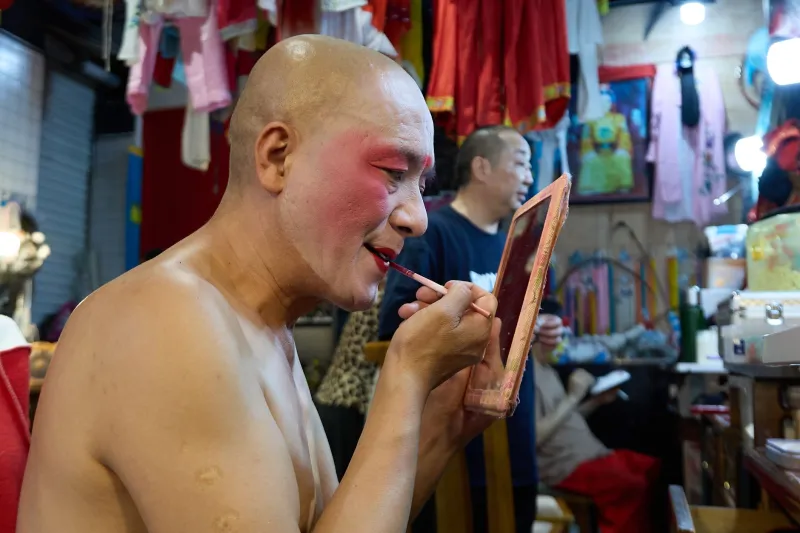
Somewhere along the way, Hollywood decided that the bravest thing a beautiful person could do was agree to look bad. Not morally complicated. Not emotionally destroyed. Not physically dangerous. Just unattractive. And we have rewarded this decision so consistently, so enthusiastically, that it has now calcified into its own genre — the de-glam prestige picture — with its own rules, its own press cycle, and its own peculiar relationship to what we actually think acting is supposed to accomplish.
Charlize Theron in Monster. Nicole Kidman's prosthetic nose in The Hours. Hilary Swank in Boys Don't Cry. Renée Zellweger in Judy. These are not bad performances — some of them are genuinely great ones. But the conversation around them has always been dominated less by what the actor did emotionally and more by what they were willing to give up aesthetically. The transformation is the headline. The performance is almost secondary.
And that's a problem worth sitting with for a minute.
The Transformation as Currency
The mechanics of the de-glam prestige role are pretty well established at this point. A conventionally attractive, often female star agrees to gain weight, lose weight, wear prosthetics, shave their head, or otherwise depart from the version of themselves that made them famous. The trades cover the physical preparation in loving detail. The star does a press run emphasizing how uncomfortable it was, how they had to let go of vanity, how liberating it felt to not care about how they looked.
Critics, primed by the transformation narrative, arrive looking for depth. The awards circuit, which has its own complicated relationship with beauty and its absence, responds warmly. The star gets nominated. Sometimes they win. The cycle repeats.
What's being traded here is interesting if you look at it directly. The star is essentially leveraging their conventional attractiveness as collateral — I am giving up the thing that makes me valuable in the marketplace, therefore this performance must be taken seriously. It's a form of conspicuous sacrifice. The ugliness is not incidental to the prestige; it is the prestige, or at least a significant part of the mechanism generating it.
Who Actually Benefits From This Arrangement
Let's talk about the audience for a second, because they're weirdly underexamined in this conversation.
There is something that functions a lot like relief — maybe even pleasure — in watching a beautiful, famous, wealthy person be made to look ordinary or worse. This isn't a particularly flattering observation about human nature, but it's not a new one either. Celebrity culture has always had a punitive undercurrent. The same magazines that put stars on pedestals spend an equal number of pages documenting their cellulite and bad airport outfits. We build them up so we can watch them come down, and then we build them up again for agreeing to come down gracefully.
The de-glam transformation role is a controlled, prestige-approved version of that same impulse. The star gets to be degraded — aesthetically, if not actually — and we get to watch. The framing is artistic. The emotional function is something older and stranger.
And the studios aren't exactly innocent in this. Casting a major star in a de-glam role is a guaranteed conversation. It generates press before the film is even finished. The star's willingness to look bad reads as commitment, which reads as seriousness, which reads as Oscar bait. It's a marketing strategy dressed up as artistic bravery.
What It Says About Who Gets to Be "Brave"
Here's the part that gets genuinely uncomfortable: this particular form of cinematic courage is almost exclusively available to people who are conventionally beautiful to begin with.
An actor who doesn't fit Hollywood's standard beauty template can't make the same sacrifice. There's no transformation narrative available to them, no before-and-after that generates the same press heat. The implicit logic of the de-glam prestige role is that beauty is the default, and departing from it is the risk. Which means the entire framework is built on the assumption that looking like a movie star is the normal state of things, and everyone else is already in the territory the beautiful actor is bravely visiting.
That's not a particularly progressive idea dressed in progressive clothing. It's the opposite — it recenters conventional attractiveness as the baseline from which all artistic deviation is measured. The actor who looks like the rest of us isn't brave for being on screen. They're just there. The star who agrees to look like us is courageous.
Sit with that for a moment.
The Performances That Actually Challenge Something
None of this is to say that physical transformation is never meaningful in performance. It absolutely can be. When the change in appearance is genuinely in service of character — when it shifts how the actor moves, how they occupy space, how other characters respond to them — it can unlock something real. Toni Collette in Muriel's Wedding is a different kind of example: a performance where physical reality and emotional truth are genuinely inseparable, without the transformation being the entire press strategy.
The difference is whether the physical change serves the story or whether the story serves the physical change. When it's the latter — when the movie exists primarily as a vehicle to showcase the star's willingness to look rough — you're not watching brave filmmaking. You're watching a very expensive photo shoot with a narrative loosely attached.
Real craft is quieter than this. It doesn't require a before-and-after. It doesn't need a press release about the prosthetics. It just needs an actor doing something true and a director who knows what to do with it.
The ugly trophy is still a trophy. And trophies are almost always more about the people handing them out than the people receiving them.