Say the Thing Out Loud: Cinema's New Obsession With Characters Who Won't Shut Up About Their Feelings
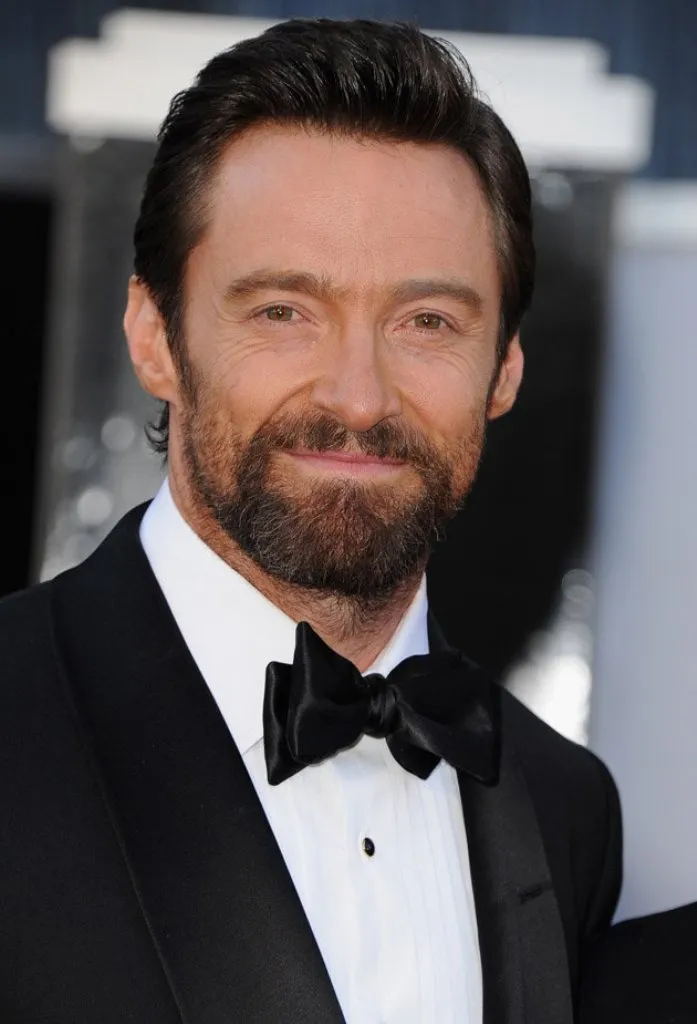
Photo: actor emotional monologue therapy scene film drama, via www.pouted.com
There's a scene you've seen a hundred times in the last five years. A character sits down — maybe across from a therapist, maybe across from the person who hurt them, maybe just in front of a mirror — and explains, with considerable precision and emotional vocabulary, exactly what happened to them, why they behaved the way they did, and what they've learned. The music swells. The camera holds. The actor delivers the words with everything they have.
And something in you deflates, because you already knew all of it. You'd been watching the film build to this understanding through action and implication and restraint, and then it arrived — the scene where the movie stops trusting you and starts reading from the manual.
This is cinema's therapy speak problem. And it's getting worse.
The Diagnosis Scene as Dramatic Crutch
Let's be specific about what we're talking about, because it's not therapy scenes per se — those can be extraordinary dramatic territory. It's the function those scenes increasingly serve: not as genuine dramatic conflict or revelation, but as exposition delivery systems dressed up in emotional language.
The character doesn't discover something in the therapy scene. They confirm it, out loud, for the audience. The scene exists not to move the story forward but to ensure that nobody misses the point. It's the narrative equivalent of a professor writing the thesis statement on the board and underlining it twice.
You see it outside therapy scenes too. The third-act confrontation where a character delivers a speech that could double as a self-help book chapter. The moment of reconciliation where someone explains, in clinical detail, the attachment theory underpinning their behavior. The breakup scene where both parties articulate their emotional needs with the fluency of someone who has been in weekly sessions for three years.
It's not that these conversations don't happen in real life — they do, increasingly, as the language of therapy has migrated into everyday speech. It's that cinema has always operated by a different logic. The camera can see what people can't say. That's the whole point.
What Gets Lost When Everything Gets Said
The history of great screen performance is largely a history of restraint. What Brando didn't say in The Godfather. What Streep's face did in the final shot of Kramer vs. Kramer. The entire emotional architecture of In the Mood for Love, a film that builds devastating longing out of almost nothing explicitly spoken.
These performances work because they trust the gap between what's happening and what's being said. They trust the audience to live in that gap, to bring their own experience to it, to feel the thing rather than be told what the thing is.
When a screenplay fills that gap with explicit emotional articulation, it doesn't clarify the drama. It forecloses it. The moment a character tells you exactly what they're feeling and why, you stop doing the interpretive work that makes film a genuinely participatory experience. You become a passive receiver of information. The movie is explaining itself to you, and explained things don't linger.
This is why the therapy-speak scene, however well-acted, so rarely produces the emotional response it's designed to generate. The mechanism is visible. You can see the craft, but you can't feel the truth.
Where This Habit Comes From
The roots of this trend are worth tracing, because they're not purely cinematic. American culture has undergone a significant shift in how emotional experience gets communicated — the mainstreaming of therapy culture, the vocabulary of trauma and healing that now permeates social media, self-help publishing, and public discourse. Terms like "attachment style," "emotional regulation," "trauma response," and "boundaries" have moved from clinical settings into everyday conversation. This is, in many respects, a good thing for how people relate to their own inner lives.
But screenwriters are humans living in that culture, and they're absorbing its habits. When the cultural norm is to name and explain emotional experience explicitly, it becomes harder to write around that impulse. The result is scripts that sound like the characters have done their inner work — and they're going to tell you about it.
There's also a more cynical explanation: fear. The fear that ambiguity will be read as incompetence. The fear that a character whose motivations remain partially opaque will be criticized as underdeveloped. The fear, in an era of social media discourse and hot-take criticism, of being accused of failing to handle a theme responsibly. Explicit articulation is the defensive crouch. If the character says the thing, nobody can accuse the film of not addressing it.
The Awards Circuit Feedback Loop
Here's where it gets structurally interesting: the awards conversation has developed a particular appetite for this kind of performance. The monologue — emotional, specific, psychologically rich — is exactly the kind of material that gets excerpted for consideration campaigns. It's demonstrable. It's clipable. It's easy to point to as evidence of craft.
This creates a feedback loop. Screenwriters write the scenes because they believe they'll be recognized. Actors request them for the same reason. Studios greenlight projects built around them. The awards circuit rewards the output. And the convention deepens, regardless of whether these scenes are actually serving the films they appear in.
Some of the most celebrated dramatic performances of the last decade have been built on exactly this foundation — the articulate breakdown, the confessional speech, the scene where a character's psychology is laid out with the precision of a case study. The performances are often genuinely extraordinary. The scenes themselves often aren't.
The Case for Letting It Breathe
The films that cut deepest are almost always the ones that resist this impulse. Marriage Story is built on what Adam Driver and Scarlett Johansson don't say to each other until they can't hold it anymore. Aftersun communicates an entire tragedy through implication and memory, trusting the audience to assemble the meaning. Past Lives ends on a shot that contains more emotional information than any monologue could carry.
These films understand something that the therapy-speak trend has forgotten: the audience's imagination is the most powerful tool available to a filmmaker. Give people a fragment of the truth and they'll build the rest themselves, from their own experience, and the result will hit harder than anything the screenplay could have written for them.
The character who can't quite say the thing is always more interesting than the character who says it perfectly. Ambiguity isn't a failure of craft. It's an invitation. Cinema used to know how to extend that invitation. It's time to remember.